Word Games for People Who Love Sudoku
Enjoy Sudoku? Try three browser-based word games that offer familiar challenges involving logic, deduction, pattern recognition, and strategic thinking.
Sudoku isn't really about numbers. There's no arithmetic involved, and the digits 1 through 9 could just as easily be replaced by letters or symbols. What makes Sudoku interesting is the logic: figuring out what belongs where, eliminating possibilities, and using one discovery to make progress elsewhere in the grid.
Several word games offer a similar kind of challenge. They use letters rather than numbers, but rely on many of the same solving habits: looking for patterns, working with incomplete information, and making deductions that gradually reveal a solution.
Here are three worth trying, all playable in a web browser.
1. Wordoku: A Familiar Classic with a Twist
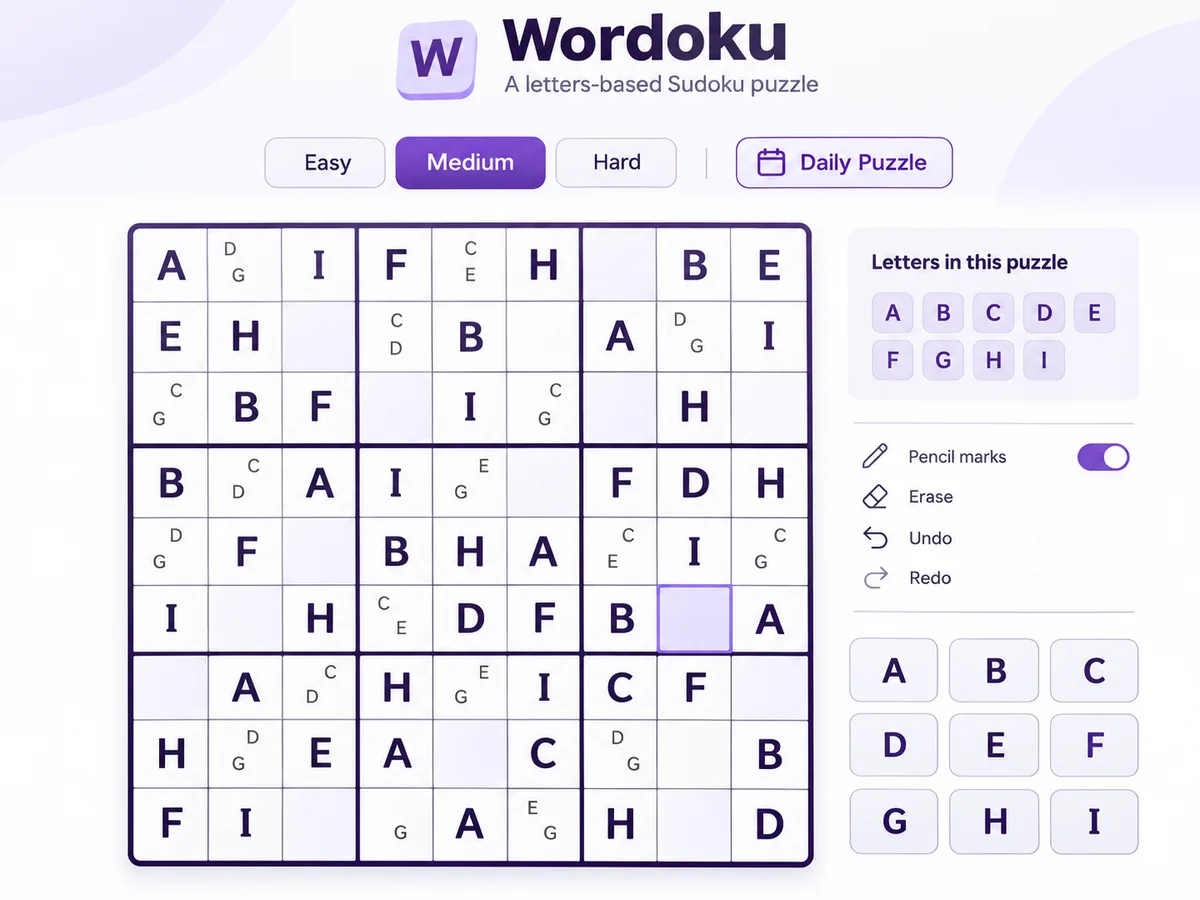
Wordoku is almost exactly Sudoku, but with letters instead of numbers. It uses the familiar 9×9 grid, with nine different letters that must each appear exactly once in every row, column, and 3×3 box.
If you know your way around Sudoku, the solving techniques are the same. The only adjustment is getting accustomed to working with letters rather than numerals. That takes a little getting used to, but the underlying logic is unchanged.
It's an interesting and refreshing take on a familiar classic. And while it doesn't involve recognizing words in the usual sense, it's a good example of how much of Sudoku's appeal comes from deduction rather than numbers.
2. Waffle: A Clever Word-Swapping Challenge
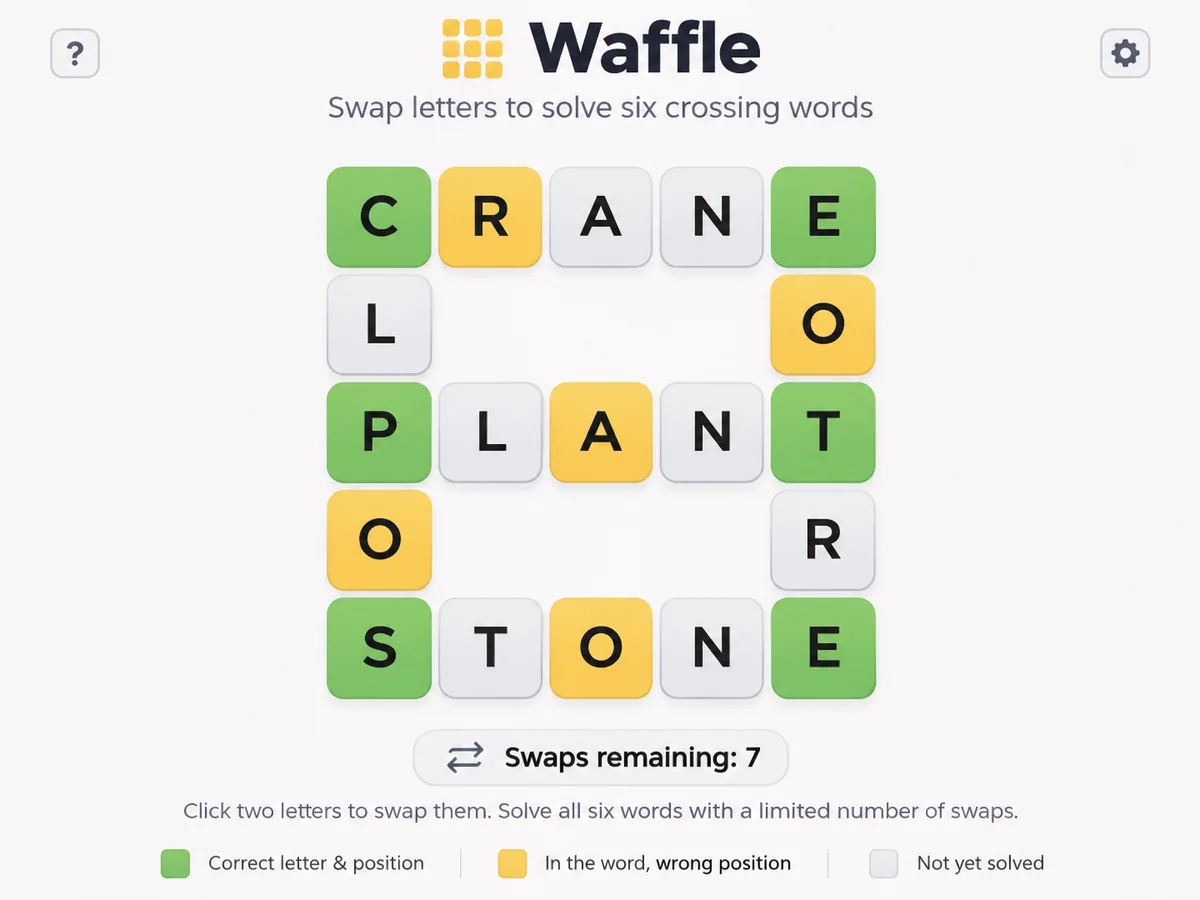
Waffle is a daily word game built around six interlocking words. All the letters are already present, but many are in the wrong positions. Players swap letters to complete the grid, using colored tiles to identify correct and misplaced letters.
It's an intriguing, challenging, and cerebral puzzle. The limited number of swaps adds an interesting strategic dimension: it's not enough to recognize the words; you also need to figure out how to arrange the letters efficiently.
Working with paper and pencil can be helpful for planning moves before committing to them. A promising swap might help one word while complicating another, so thinking a few moves ahead pays off.
The result is a very satisfying solve, especially when the entire grid comes together within the allowed number of moves.
Like Sudoku, Waffle rewards patience, deduction, and attention to how individual decisions affect the whole puzzle.
3. CrossEights: Finding Words Through Patterns and Crossings
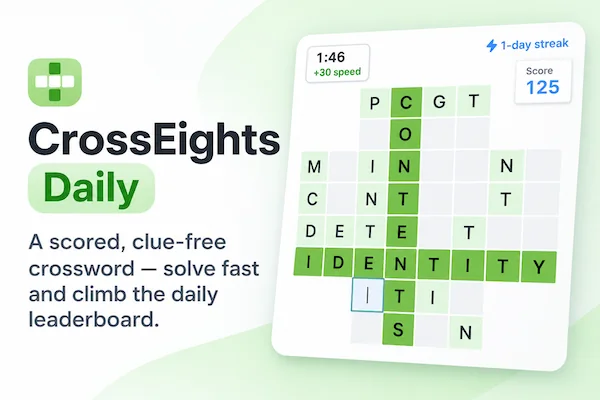
CrossEights uses an 8×8 grid containing eight interlocking eight-letter words, four across and four down. There are no clues. Players start with a handful of letters and identify words through pattern recognition and the letters supplied by crossing answers.
The Sudoku connection comes from the way information builds throughout the grid. Recognizing one word reveals letters in several others, narrowing their possibilities and sometimes triggering a sequence of new discoveries.
CrossEights also adds scoring to the challenge. Players are rewarded for solving quickly and using fewer hints, making efficient deductions part of the game rather than simply reaching the completed grid.
It combines vocabulary and word recognition with the kind of interconnected reasoning that makes Sudoku enjoyable.
Different Games, Similar Solving Skills
These three games approach puzzles differently. Wordoku stays closest to traditional Sudoku, substituting letters for numbers while preserving the familiar logic. Waffle adds word recognition and move planning, while CrossEights emphasizes identifying words from incomplete patterns and making use of crossing letters.
What they share is the satisfaction of making progress through deduction. A seemingly small discovery can change the possibilities elsewhere, and a difficult grid can become much easier once a few important pieces fall into place.
For Sudoku enthusiasts interested in something different, each offers a new way to put familiar solving skills to work.